Documents
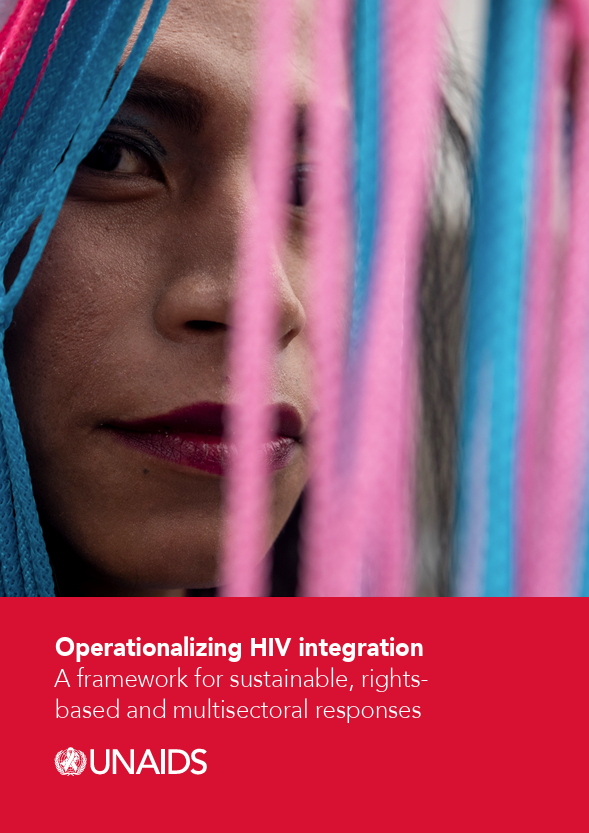
Operationalizing HIV integration - A framework for sustainable, rights-based and multisectoral responses
17 August 2026
This technical note on multisectoral integration provides a practical framework for operationalizing HIV integration as a pathway toward sustainable, nationally led and rights-based HIV responses.

Feature Story
Seeing what others miss: Inclusion in Papua New Guinea’s HIV Response
14 August 2026
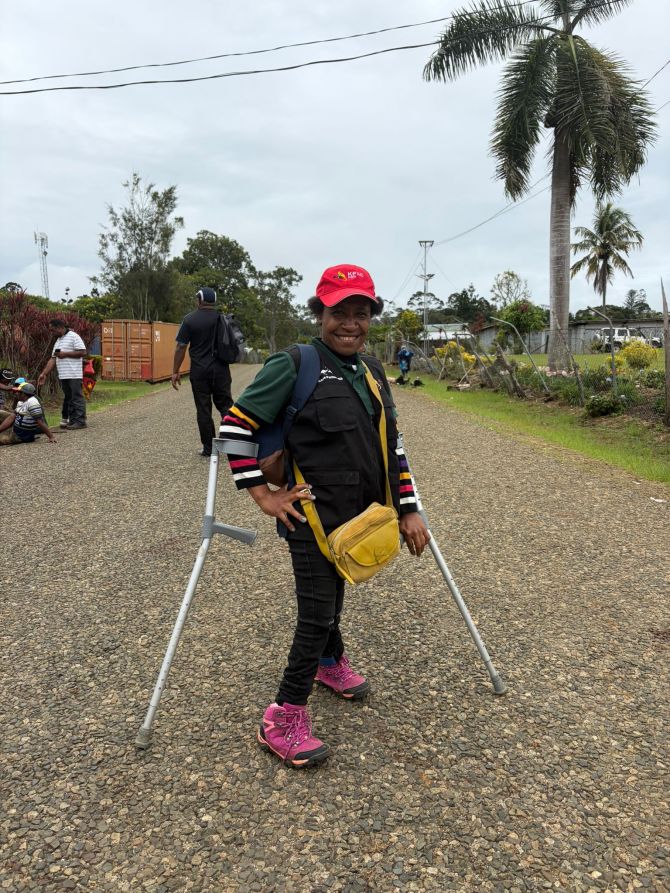
14 August 2026 14 August 2026During a recent monitoring visit to an HIV clinic in the Highlands of Papua New Guinea, Brenda Lombange noticed a person with a physical disability leaving the building. Several steps led up to the entrance.
“I was thinking, ‘how can a wheelchair go there?’” Ms Lombange recalled.
For her, the question is personal. Ms Lombange leads the community-led monitoring team at the Key Population Advocacy Consortium (KPAC), a national coalition representing communities most affected by HIV and tuberculosis. She also lives with a disability herself.
For her, accessibility goes beyond ramps and steps.
“Some people have hearing difficulties. Some cannot walk long distances. Others have eyesight problems and cannot read the small print,” Ms Lombange explained. “Through our work, we can identify what support people need, whether that means information in different formats or better communication.”
In her mind, the worse is an insensitive response from a health worker, which is why she goes out and meets people.
“We visit clinics not only to check whether essential tests, medicines and supplies are available, but also to understand what people experienced when they sought care,” Ms Lombange said. “We listen to whether they could even access the clinic, afford the services, understand the information they received and feel safe, respected and included.”
More than 1.5 million people - around one in six Papua New Guineans - are estimated to live with some form of disability. A national Gender Equality, Disability, and Social Inclusion (GEDSI) assessment found that inclusion had not yet been embedded across PNG’s HIV response and was not included in its community-led monitoring tools.
In 2025, Papua New Guinea declared HIV a public health crisis. The estimated number of new HIV infections doubled since 2010, with around 30 people acquiring HIV every day—an estimated 11,000 new infections in 2024 alone.
Alarmingly, half are among children and young people under 24. New infections are also rising among women and children, while rates of mother-to-child transmission remains critically high.
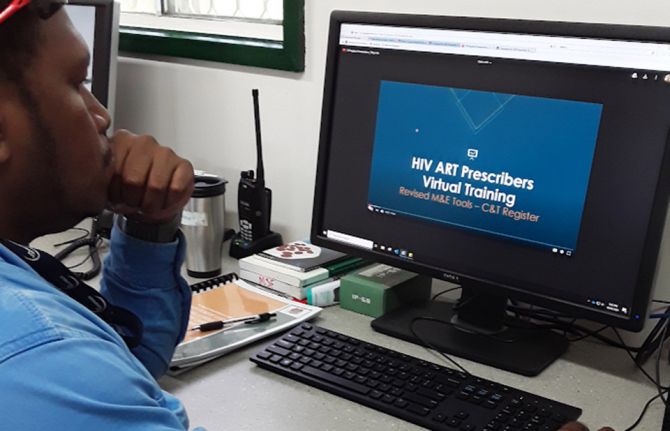
With support through the Indo-Pacific HIV Partnership, monitoring tools were revised to address this gap.
Community-led monitoring teams can now better identify and document barriers faced by people with disabilities, including disabilities that may not be immediately visible. Using the internationally recognized Washington Group questions on functioning—covering seeing, hearing, mobility, cognition, self-care and communication—they can assess accessibility in both HIV services and antenatal clinics.
Cathy Ketepa, a woman with a disability and chair of KPAC, emphasized, “Having two women with disabilities in leadership positions shows that we are not only beneficiaries, but also leaders and decision-makers in our movements.”
Lesley Bola, KPAC’s Executive Director, describes his peers living with disabilities as the organization’s “eyes and ears.”
“They sensitize us and open our minds to inclusion,” he said. “There are many people living with HIV who are also persons with disabilities. Disability is cross-cutting. When we go into provinces, we find vulnerable communities who are part of us, but who need extra support.”
A sentiment echoed by Health Equity Matters.
“KPAC already has the trust, knowledge and lived experience of the communities it represents,” said Jess Hill, the Pacific Program Lead. “Our role is to help strengthen the organization behind that work so community evidence can influence decisions and lead to lasting change.”
KPAC’s work was supported through the Australian Government-funded Indo-Pacific HIV Partnership, with Health Equity Matters providing organizational strengthening and UNAIDS contributing technical and policy support.
“We are grateful to the Australian Government for investing not only in community-led activities, but also in the leadership and capacity needed to sustain them,” said Manoela Manova, UNAIDS Country Director for PNG. “KPAC’s progress shows what is possible when organizations rooted in communities have the tools and support to turn evidence into action.
Region/country

Press Release
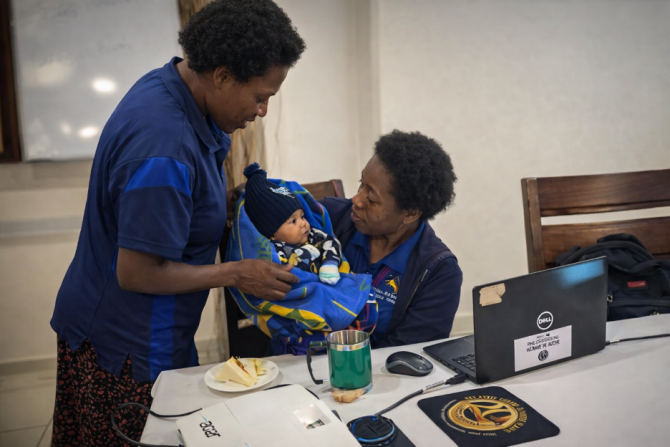
New monthly HIV prevention pill, in late-stage trials, could provide a giant step forward in stopping new HIV infections
05 August 2026 05 August 2026If proved effective, UNAIDS highlights that speed, affordability and equitable access will be critical
GENEVA/JOHANNESBURG, 5 August 2026—An oral monthly pill to prevent HIV, alimatravir (also known as MK-8527), produced by Merck Sharp & Dohme (MSD), is currently undergoing promising phase three trials. If the trials are successful, this development could provide another tool in the HIV prevention toolbox and a positive step towards ending AIDS.
UNAIDS commends MSD for its early access plan to help partners prepare for manufacturing and delivery. MSD has announced voluntary licensing agreements with generic pharmaceutical manufacturers, including three in Africa, to produce the once-monthly oral HIV prevention candidate. Early planning for financing, demand forecasting, accessibility and regulatory readiness will be as important as scientific innovation to ensure that new HIV prevention technologies reach people rapidly and equitably.
"Scientific innovation has the power to change the trajectory of the AIDS pandemic, but only if it reaches everyone who needs it," said Angeli Achrekar, Deputy Executive Director of UNAIDS. "If alimatravir proves to be safe and effective and receives regulatory approval, manufacturing must be rapidly scaled up and the product made affordable and accessible in low- and middle-income countries from day one. No one should have to wait years for life-saving HIV prevention."
UNAIDS commends MSD for the proposed partnerships with Aspen Pharmacare in South Africa, Quality Chemicals Industries Limited in Uganda and Universal Corporation Limited in Kenya. If the trials are successful, the agreement will present an important opportunity to strengthen Africa's local pharmaceutical manufacturing capacity. It will also bring innovative HIV prevention options closer to the people who need them most, supported by sustainable market development and technology transfer.
The announcement aligns with UNAIDS’ Global AIDS Strategy’s call to ensure equitable access to innovation and the strengthening of health sovereignty through local production, regional manufacturing and pooled procurement commitments. This was reaffirmed by countries in June this year in the 2026 Political Declaration on HIV and AIDS.
Despite remarkable progress in scientific innovations in recent years, including antiretroviral-based HIV prevention options, millions of people—particularly adolescent girls and young women, marginalized populations and other people at heightened risk of HIV—still lack access to effective HIV prevention options.
In 2025, 1.2 million people acquired HIV, and more than half a million people (570 000) died of AIDS-related illnesses. Around 3100 adolescent girls and young women acquire HIV every week in sub-Saharan Africa. Expanding choice through new prevention technologies, alongside sustained investment in community-led services and strong health systems, will be essential to ending AIDS as a public health threat by 2030.
“UNAIDS welcomes partnerships that link clinical research, regional manufacturing and equitable access to HIV services,” said Ms Achrekar. “UNAIDS calls on governments, pharmaceutical companies, global health partners and communities to work together to accelerate production, ensure affordable pricing and remove barriers that delay access to new HIV prevention tools across all regions of the world.”
UNAIDS will continue working with countries and partners to monitor equitable access, support affordable pricing, strengthen costing and resource planning, and advance sustainable financing pathways for the introduction and scale-up of all new HIV prevention technologies.
UNAIDS
The Joint United Nations Programme on HIV/AIDS (UNAIDS) leads and inspires the world to achieve its shared vision of zero new HIV infections, zero discrimination and zero AIDS-related deaths. UNAIDS unites the efforts of 11 UN organizations—UNHCR, UNICEF, WFP, UNDP, UNFPA, UNODC, UN Women, ILO, UNESCO, WHO and the World Bank—and works closely with global and national partners towards ending the AIDS epidemic by 2030 as part of the Sustainable Development Goals. Learn more at unaids.org and connect with us on Facebook, Twitter, Instagram and YouTube.
Contact
UNAIDSCharlotte Sector |
sectorc@unaids.org
UNAIDS
Robert Shivambu
tel. +27 83 608 1498
shivambuh@unaids.org
Documents
Draft Timewise Agenda
26 October 2026

Documents
Modalities and Procedures for the 2026 PCB Meetings
26 October 2026

Documents
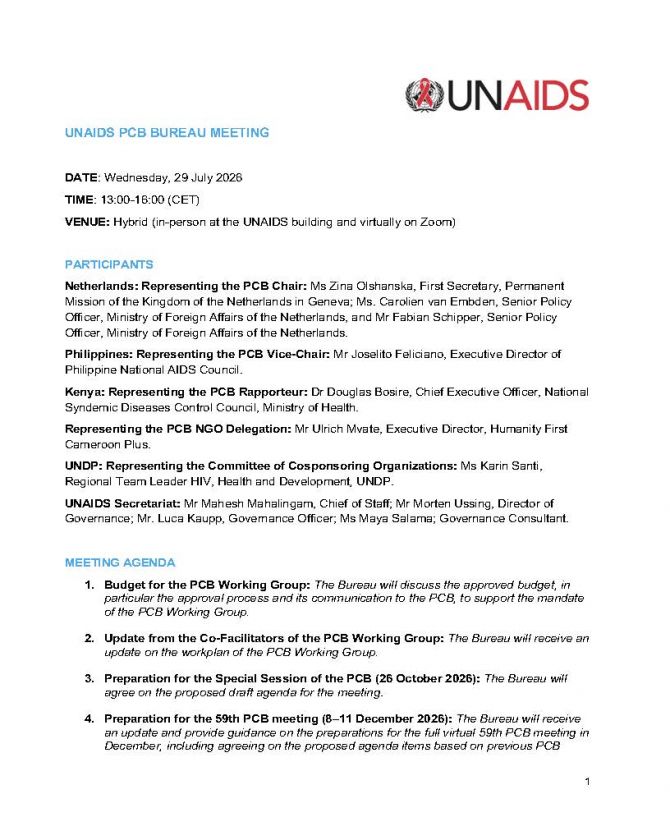
UNAIDS PCB Bureau meeting 29 July 2026
04 August 2026