
Documents
Community-led monitoring progression matrix
05 October 2026
The Matrix is a self-assessment tool to assist all CLM stakeholders—including service end-users, CLM implementers and partners, service providers, programme managers and policy-makers—to reflect on the progress of CLM efforts at the national or subnational level in the year(s) past and set objectives for the coming year(s). The ultimate goal is to improve the quality of services being delivered through improving CLM.

Feature Story
Stakeholders chart a people-centred path for the future of the Joint United Nations Programme on HIV/AIDS (UNAIDS)
30 September 2026
30 September 2026 30 September 2026Governments, communities, civil society and United Nations partners have called for a transformed Joint United Nations Programme on HIV/AIDS (UNAIDS) that is more integrated, efficient and sustainable, while retaining the leadership, accountability and community partnership needed to end AIDS as a public health threat.
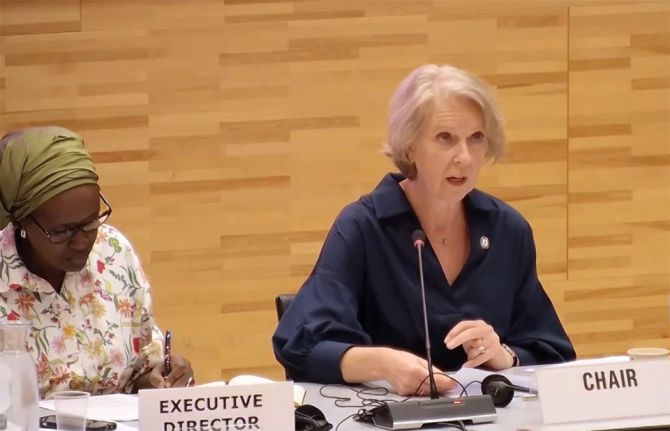
At a two-day multi-stakeholder consultation, participants considered options being developed by the Programme Coordinating Board (PCB) Working Group on the future transition and integration of UNAIDS within the UN system to end AIDS by 2030 and protect the gains beyond.
“Countries want a Joint Programme led by a strong Secretariat, or Hub, with political weight, visibility and authority. A Hub able to work across sectors and beyond the limitations of any single institutional mandate. And a Hub that protects the space for communities to influence decisions, shape priorities and hold institutions accountable,” said Paul Zubail, Deputy Director General for European and International Politics at the German Federal Ministry of Health.
“Should that Hub become leaner over time? Yes. But leaner cannot mean weaker. If we expect the Hub to lead, it must have the capacity and standing to lead. Reducing it to a marginal coordinating function would dismantle the central driving force of the UN’s HIV response,” he added.
Participants were clear that transformation must strengthen, not dilute, the HIV response. They broadly supported a more coordinated ‘One UN’ approach and stronger national ownership. At the same time, they stressed that any transition must be phased, evidence-based and tailored to country realities, particularly where HIV infections are rising, services are under pressure, or human rights and civic space are at risk.
“The success of this transition will be measured not by the speed of institutional change, but by whether people continue to receive the support, protection and services they need,” said Winnie Byanyima, Executive Director of UNAIDS. “Success is about transitioning to national institutions, not simply redistributing functions within the UN system.”
The Working Group leading the recommended transformation process has already agreed that sunsetting the UN Joint Programme is not a viable option. Its proposals aim to build a leaner, more cohesive Joint Programme in which co-sponsoring organizations take stronger responsibility for technical implementation, while a hub retains the capacity to lead, convene, advocate, gather and analyse data, promote accountability and uphold human rights and gender equality.
Participants emphasized that country-level arrangements must not follow a single template. In some settings, functions may increasingly be coordinated through Resident Coordinator offices, co-sponsoring organizations or national institutions.
“UNAIDS’ institutional knowledge, technical expertise and partnerships built over years, especially at country level and with communities are an important asset for the global HIV response.” said Uday Bhanu Da, Representative of India, Ministry of Health and National HIV/AIDS Control Programme.
Thembisile Xulu, CEO of the South African National AIDS Council, Chairperson of the HIV Leadership Forum and Chair of the Global NAC Community of Practice, representing the heads of National AIDS Councils from more than 40 countries, highlighted the value of UNAIDS’ systems, structures, experience and political standing in supporting country-level impact. She stressed that the future of UNAIDS country hubs should be shaped by the context and needs of each country.
But many speakers highlighted the need for continued, identifiable HIV leadership in countries where national systems are not yet ready to assume these functions, where communities face criminalization or discrimination, or where the response requires urgent coordination.
Community representatives repeatedly underlined that UNAIDS’ contribution is not only technical. Its relationships with communities, governments and partners have helped create space for people living with HIV and key populations to influence policies, challenge stigma and secure access to services. Participants called for those relationships, as well as technical capacity, to be protected through any transition.
Speaking on behalf of Global Black Gay Men Connect, Michael Ighodaro, Executive Director, and a man living with HIV, stressed the need for clear criteria for country transitions, meaningful community involvement, continued protection for key populations, and resources that reach communities directly.
“Integration must not mean dilution,” was a recurring message. Participants called for clear safeguards to ensure that HIV expertise, community engagement, human rights, gender equality and multisectoral coordination are not lost as responsibilities shift across the UN system.
There was strong support for developing transparent readiness criteria to guide any transfer of functions. These should consider epidemiology, national capacity, financing, community participation, human rights, gender equality and civic space. Participants also called for every future country arrangement to have a named, resourced and accountable HIV coordination function, with clear authority to convene partners and engage communities.
The consultation also highlighted the importance of regional capacity. Participants noted that regional support is essential for addressing cross-border HIV challenges, sharing expertise, supporting community networks and responding to diverse epidemics and political contexts.
Funding was a central issue throughout the discussions. Participants agreed that the future model must be financially sustainable and viable but stressed that financing should follow the functions that the PCB wishes to retain. The Working Group is examining different budget scenarios and will provide further analysis of the implications of different funding levels, including the costs of a responsible transition.
The consultation also affirmed the distinctive governance role of the PCB, including its participation by civil society. Participants called for stronger mutual accountability among co-sponsors, communities, the UNAIDS hub and Member States, and for meaningful community involvement in decisions on resources, monitoring and results.
The Working Group will now incorporate the feedback received into its final plan. The plan is expected to be published on 8 October and will be considered by the PCB at a special session on 26 October.
The consultations underscored a shared commitment to build a renewed Joint Programme that is fit for the changing world characterized by funding declines for HIV and other public health programmes, rooted in national ownership and community leadership, and able to work with countries and communities to end AIDS.
Documents
Options Paper on the further transition and integration into the UN system and beyond
28 September 2026
Press Release
Countries, communities and partners underscore UNAIDS’ vital role in advancing the HIV response and health sovereignty at UNGA81
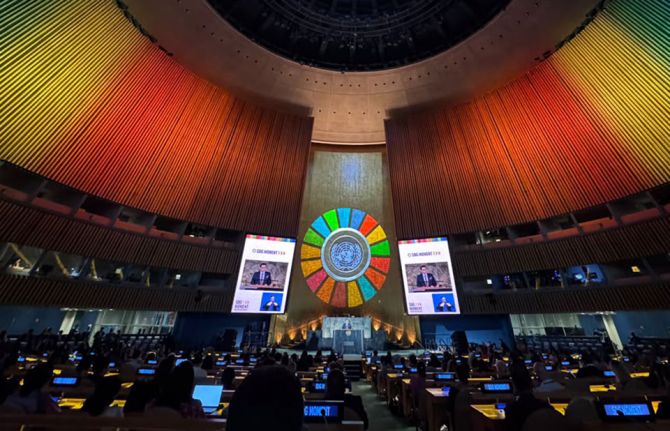
25 September 2026 25 September 2026NEW YORK/GENEVA, 25 September 2026—At the 81st session of the United Nations General Assembly (UNGA81) in New York, the global community made it clear: ending AIDS remains a shared responsibility. From countries and community leaders to international partners, a powerful united front stepped up to bolster UNAIDS’ critical mission to advance the end of AIDS as a public health threat by 2030.
This coalition was anchored by high-level dialogues on African health sovereignty, equitable access to medicines and the transformation of the Joint United Nations Programme on HIV/AIDS (UNAIDS), demonstrating that UNAIDS’ agenda is sustained by renewed by global solidarity.
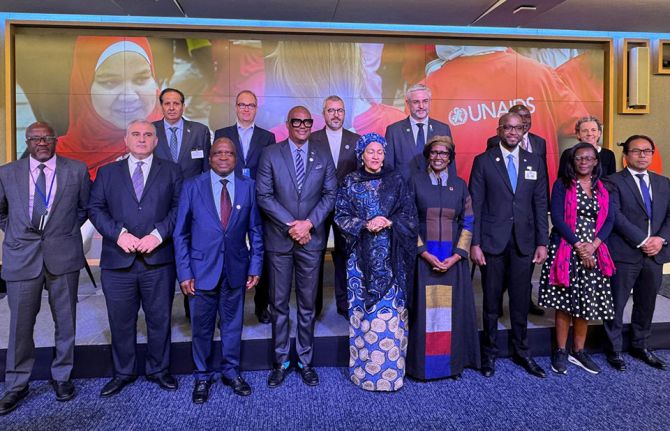
Joining one of UNAIDS’ high-level events, United Nations Deputy Secretary-General Amina Mohammed highlighted the Joint Programme’s contribution over more than three decades, saying the global HIV response is “among the finest achievements of the UN.”
Strong backing from countries
A recurring message throughout UNGA81 was the value countries and partners place on UNAIDS’ unique platform for driving action and supporting countries and communities to advance progress towards ending AIDS by 2030 while strengthening preparedness for future health threats.
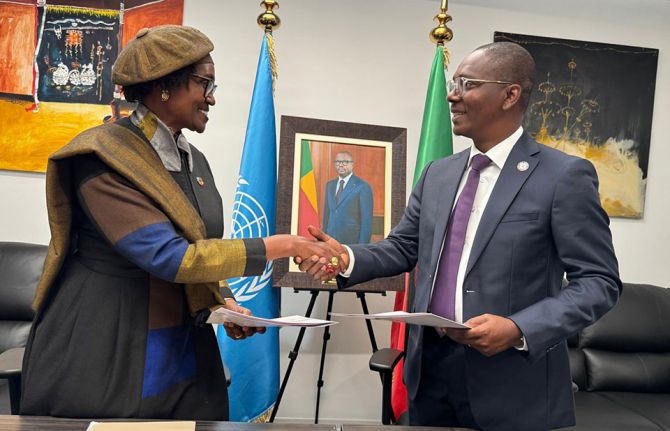
The Government of Benin stepped forward to sign a new agreement with UNAIDS, providing over €500,000 to support UNAIDS' work in Benin over 2026-2027.
President Duma Boko of Botswana reaffirmed his country's confidence in UNAIDS and the support it has provided throughout Botswana's HIV response. He also offered additional support for UNAIDS' presence in the country and sub-regionally and recognized UNAIDS in his plenary remarks to the UN General Assembly.
Benin and Botswana are among a growing number of programme countries making new or enhanced commitments to UNAIDS. Recent financial contributions and commitments from countries including Algeria, China, Côte d'Ivoire, Kazakhstan, the Lao People's Democratic Republic, the Philippines, South Africa and Thailand demonstrate broad recognition of the continuing value of the Joint United Nations Programme on HIV/AIDS.
"Countries are telling us: stay with us, we need you," said Ms Byanyima. "Their support speaks volumes about the impact UNAIDS has had over decades and about the value of maintaining our partnership and support during this time of transformation and change."
Mobilizing action on African health sovereignty
One of UNAIDS’ flagship event during UNGA81 brought together ministers, policymakers, local pharmaceutical manufacturers, civil society representatives, people living with HIV and regional and international institutions to accelerate African local production of medicines and health technologies.
Convened jointly with the African Union Development Agency (AU NEPAD), the event focused on advancing health sovereignty by expanding production of lifesaving HIV medicines and other critical health technologies across the continent.
Participants explored practical steps to accelerate local manufacturing of cutting-edge HIV prevention and treatment technologies, strengthen regulatory systems and create sustainable markets that can expand access to essential medicines. The high-level participants underscored a shared conviction that achieving health sovereignty requires Africa to become a producer, not simply a consumer, of critical health products.
Building confidence in the future of UNAIDS
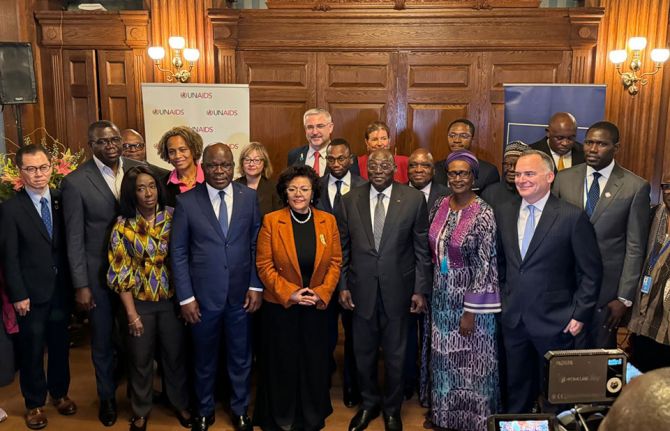
In partnership with the Governments of Botswana and the Netherlands, UNAIDS also convened a high-level discussion on the transformation of the Joint Programme and its future role in the global HIV response.
The event attracted strong interest and participation from over 16 ministers, with additional senior government representatives and representatives of civil society, highlighting that ending AIDS requires the UN to maintain a strong, coordinated global HIV response, led by the Joint Programme on HIV/AIDS.
Participants welcomed the progress UNAIDS has already made in its transformation process and underscored the importance for the UN to maintain its unique mandate to unite governments, communities, multilateral organizations and development partners through the Joint Programme on HIV/AIDS.
From commitment to action
At UNGA81, UNAIDS came with a clear mission to carry forward the momentum generated by the United Nations General Assembly 2026 Political Declaration on HIV/AIDS adopted in June this year, and the Global AIDS Strategy 2026-2031, engaging governments, communities and partners around the actions needed to end AIDS as a public health threat by 2030.
"What we heard throughout this week was a powerful affirmation from countries and partners that UNAIDS remains essential not only to ending AIDS, but also to advancing UN reform, health sovereignty, expanding access to medicines and addressing the inequalities that continue to drive disease,” said Ms Byanyima.
UNAIDS
The Joint United Nations Programme on HIV/AIDS (UNAIDS) leads and inspires the world to achieve its shared vision of zero new HIV infections, zero discrimination and zero AIDS-related deaths. UNAIDS unites the efforts of 11 UN organizations—UNHCR, UNICEF, WFP, UNDP, UNFPA, UNODC, UN Women, ILO, UNESCO, WHO and the World Bank—and works closely with global and national partners towards ending the AIDS epidemic by 2030 as part of the Sustainable Development Goals. Learn more at unaids.org and connect with us on Facebook, Twitter, Instagram and YouTube.