Press Statement
United Nations High-Level Meeting on HIV/AIDS opens as UNAIDS urges countries to firmly commit to ending AIDS by 2030
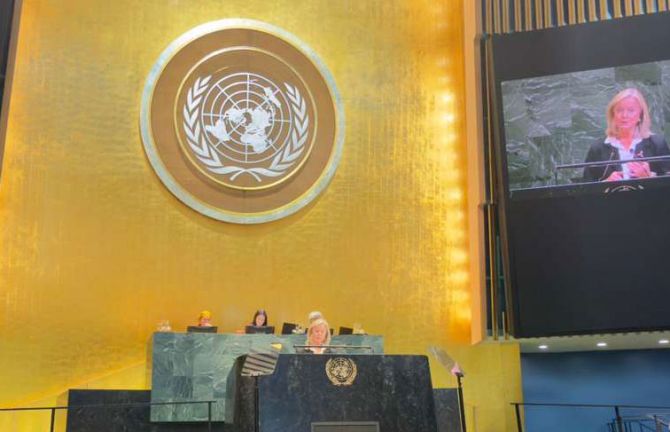
22 June 2026 22 June 2026GENEVA, 22 June 2026—The United Nations High-Level Meeting on HIV/AIDS opened today at a moment of incertitude for the global AIDS response. Decades of progress have delivered what once seemed impossible: millions of lives saved, new HIV infections reduced, and treatment expanded around the world.
However, as global leaders gather in New York to adopt a new UN Political Declaration on HIV/AIDS, the last Declaration before the goal of ending AIDS as a public health threat by 2030, that progress is increasingly threatened due to funding cuts and a push back on human rights. Global leaders face a defining question: will the world protect hard-won gains and accelerate towards ending AIDS?
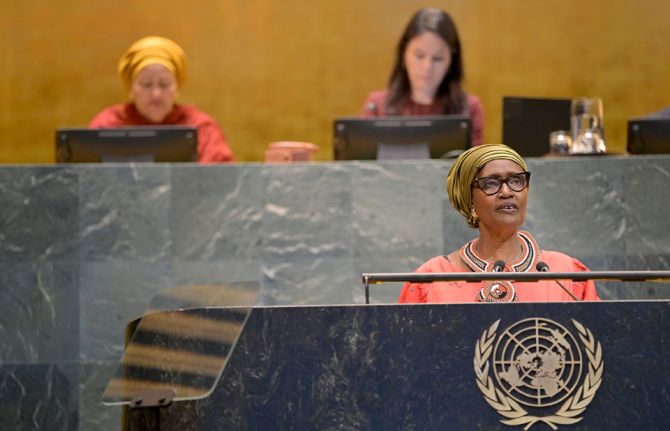
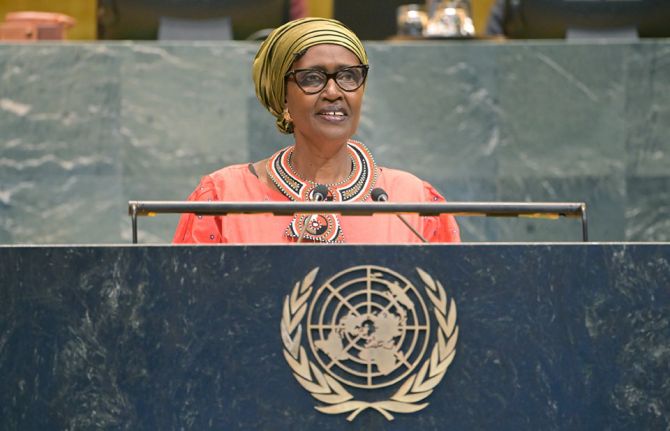
“This Political Declaration is our chance to build on 25 years of commitment and point the way to 2030 to show that multilateralism can deliver,” said Winnie Byanyima, Executive Director of UNAIDS. “We cannot fail, because we know what we must do: commit to multilateralism; sustain international financing as countries mobilize their own resources; protect the rights of people living with HIV; let communities lead for their people; and spur the science, so that innovations reach everyone in need as fast as possible, if we do these things, we can end AIDS.”
New data from 2025 released by UNAIDS ahead of the meeting show that sustained investment, scientific advances and community-led efforts have led to tremendous success against AIDS. Since 2010, AIDS-related deaths have fallen by 56%, new HIV infections decreased by 43%, and 32.1 million people (78% of the 40.9 million people living with HIV) are now accessing treatment.
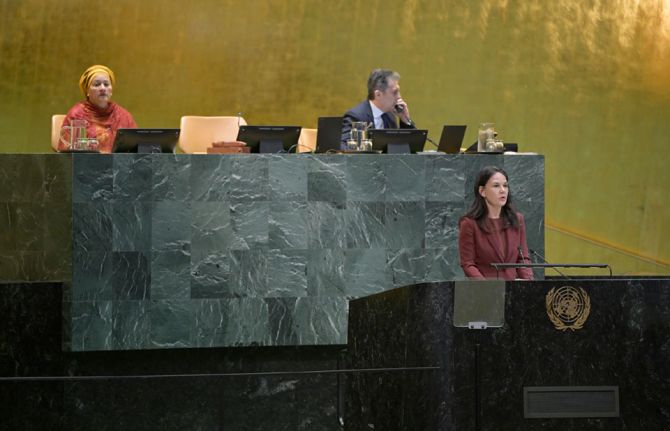
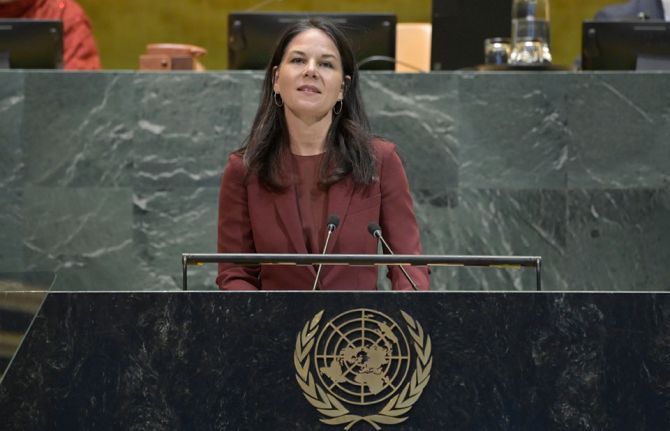
“The global multilateral response to HIV has become not only one of the United Nations’ greatest success stories, but one of the most remarkable achievements in the history of public global health,” said Annalena Baerbock, President of the United Nations General Assembly. “Providing a blueprint for confronting other global health emergencies, from Ebola to COVID-19.”
However, UNAIDS’ new data for 2025 also show that success is fragile. Nearly 9 million people living with HIV are not on treatment. In 2025, global development assistance fell by 23%—the sharpest drop on record. Unless funding is maintained, there is a serious risk of HIV treatment interruptions—which will lead to rising rates of new infections and deaths. Between 2024 and 2025 HIV testing programmes fell by 22% in high-burden settings and funding for condoms has been cut by more than 90% in some cases.
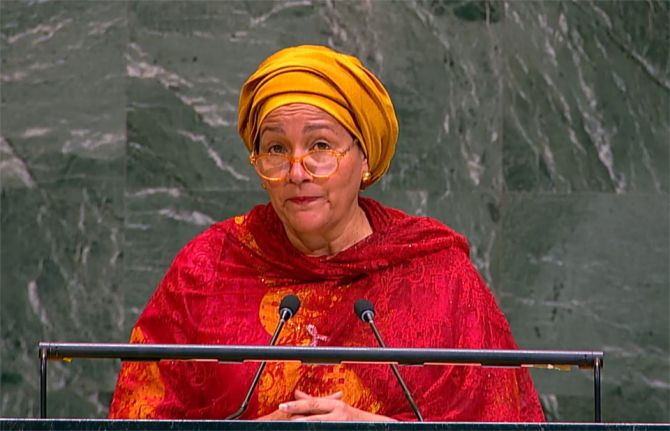
“This meeting is a chance to demonstrate that, even in difficult times, the international community can rally, once again, around science, around human dignity, solidarity and shared responsibility,” said Amina Mohammed, Deputy Secretary-General of the United Nations, delivering remarks on behalf of the UN Secretary-General. “The responsibility to end AIDS as a public threat by 2030 belongs to each and every one of us. Let us move forward together—with a sense of urgency, with solidarity and with ambition.”
Recent funding cuts from multiple donors have severely impacted HIV prevention and community-led services, and criminalization of key populations is increasing for the first time since UNAIDS began tracking these trends. As a result, many communities at highest risk for HIV—including young women and girls, men who have sex with men, sex workers and people who inject drugs—are facing major challenges in accessing lifesaving HIV services.
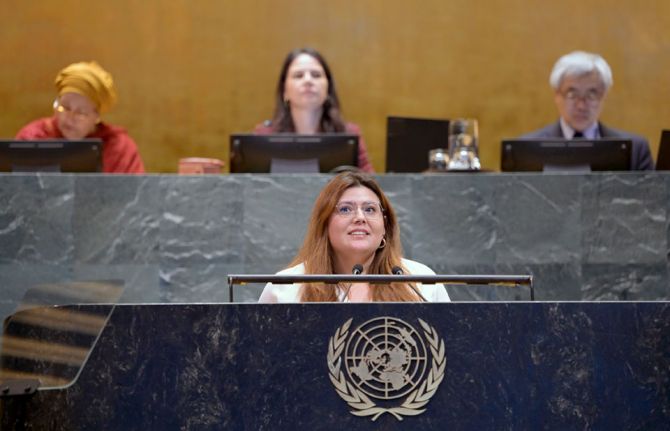
“Progress is real and it is fragile. Without renewed commitments and actions, we risk a resurgence of the epidemic. Community led services are disappearing and prevention programmes are being scaled back. Across many parts of the world commitments to gender equality, sexual and reproductive health and rights and inclusion of key populations are being weakened,” said Keren Dunaway, International Community of Women Living with HIV. “These gains were not handed to us. They were won through decades of advocacy. The future of the response will depend on the choices we make in this room.”
Importantly, there are windows of opportunity. Domestic financing for HIV rose from 28% in 2010 to 52% in 2024, however it cannot replace global solidarity. Regional initiatives like the Accra Reset or the African Union Roadmap to 2030 are examples of a new and progressive face to aid and development. Also, new innovations, particularly long-acting HIV prevention medicines, are becoming available and have the potential to significantly advance the end of AIDS—but only if implemented at scale and with regional production.
“Just as an earlier generation transformed crisis into action, we must transform today’s uncertainty into tomorrow’s progress. Future generations will judge us by whether or not, when the finish line was finally in sight, we dug deep and found the courage to cross it. The world has come too far. The stakes are too high. And the opportunity is too great. Now is not the time to quit. It is time to finish the job,” said Sandra Thurman, AIDS advocate.
The United Nations High-Level Meeting on HIV/AIDS is taking place from 22 to 23 June. At this meeting, UN Member States will consider a new Political Declaration on HIV and AIDS which will establish the direction of the global HIV response for the next five years. The 2026 Political Declaration on HIV and AIDS is mandated to feature new global targets for 2030, ideally, mirroring those in the Global AIDS Strategy 2026-2031and reflecting UN Member States’ renewed commitment to end AIDS as a public health threat by 2030.
UNAIDS
The Joint United Nations Programme on HIV/AIDS (UNAIDS) leads and inspires the world to achieve its shared vision of zero new HIV infections, zero discrimination and zero AIDS-related deaths. UNAIDS unites the efforts of 11 UN organizations—UNHCR, UNICEF, WFP, UNDP, UNFPA, UNODC, UN Women, ILO, UNESCO, WHO and the World Bank—and works closely with global and national partners towards ending the AIDS epidemic by 2030 as part of the Sustainable Development Goals. Learn more at unaids.org and connect with us on Facebook, Twitter, Instagram and YouTube.
Related resources
Documents
Agenda item 4: Administrative review statistical overview 2025
30 June 2026
Documents
Agenda item 6.1: Quadrennial Comprehensive Policy Review (QCPR)
30 June 2026
Feature Story
"I am excited": 21-year-old Jane Mndebele becomes the first South African to receive lenacapavir
19 June 2026
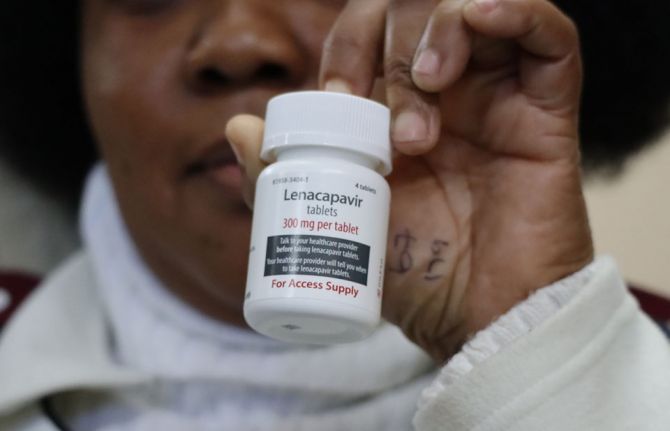
19 June 2026 19 June 2026History was made in the Mpumalanga province of South Africa on Friday, 5 June, as 21-year-old Jane Mndebele became the first person to receive lenacapavir, the twice-yearly HIV prevention injectable, as part of the country's new national prevention programme.
"I am excited," she said, after the injection was administered by Health Minister, Dr Aaron Motsoaledi himself. Her words captured the mood of thousands gathered at Lilian Ngoyi Stadium in Secunda, and of a global health community that has waited years for this moment.
South Africa, home to the world's largest HIV epidemic with an estimated 7.9 million people living with the virus, officially launched the national rollout of lenacapavir, becoming the ninth African country to do so.
"The launch of lenacapavir marks a turning point in our nation's fight against HIV. It represents the triumph of science over despair. It represents the power of innovation to save lives," said President Cyril Ramaphosa. He was careful, however, to frame the injection as one tool among many. "It is one more powerful tool in our arsenal. It complements HIV testing, oral PrEP, treatment as prevention, condoms, voluntary medical male circumcision, and behavioural interventions."
Lenacapavir is a powerful new option, but it works best as part of a broader package. UNAIDS stresses that the injection must be integrated alongside condoms, family planning, sexual and reproductive health services, and community-based HIV prevention programmes. Evidence from programmes such as DREAMS has shown that when HIV prevention is combined with education, economic opportunity, protection from violence, and safe spaces for young women, the results are transformative. UNAIDS data shows that girls who complete secondary education have a 50% lower risk of HIV infection.
The stakes are stark. South Africa recorded approximately 150,000 new HIV infections in 2024, with women and girls accounting for 59% of those. Over 71,000 were among adolescent girls and young women aged 15 to 24, equivalent to more than 1,000 newly infected young women every week. The government's decision to prioritise this group in the rollout of lenacapavir is both welcome and significant.
Alankar Malviya, UNAIDS Multi-Country Director for South Africa, Lesotho and Eswatini, welcomed the commitment. "President Ramaphosa has demonstrated political will to continue on a path to transform the HIV response. We welcome the prioritisation of adolescent girls and young women, men who have sex with men, sex workers and people who use drugs," he said, adding that UNAIDS welcomes ongoing discussions between Gilead Sciences and the government to explore local generic production.
For UNAIDS, the launch is both a milestone and a call to action. "Today is a day many of us here in South Africa have waited for," said Anne Githuku-Shongwe, UNAIDS Regional Director for Eastern and Southern Africa. "For many of us who have worked in the HIV response, this moment feels almost unimaginable. Now we must make sure that this breakthrough does not become another example of scientific success and implementation failure."
The rollout begins at 360 public health facilities across six provinces and 24 high-burden districts, with a national target to reach close to one million people by end of 2027, and three million within three years. A combined investment of R1.3 billion from the Global Fund and the Children's Investment Fund Foundation, alongside government funding, will support the programme. Generic versions of lenacapavir are expected from 2027 at around USD 40 per person per year, a dramatic reduction from the tens of thousands of dollars charged in high-income countries, though affordability at scale remains a challenge for many countries facing shrinking health budgets.
For now, Jane Mndebele and the thousands of South Africans who will follow her to clinics in the coming weeks represent something real and hard-won: proof that with political courage, community partnership, and sustained investment, scientific progress can be made to serve the people who need it most.
Region/country
Related

Feature Story
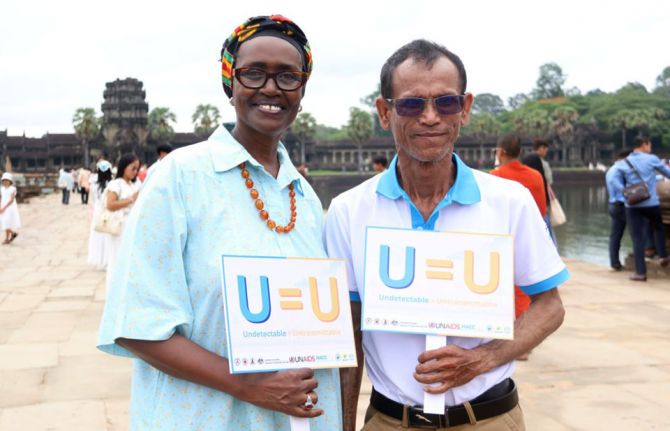
Cambodia reaches 95–95–95 targets, showing the power of community leadership
18 June 2026
18 June 2026 18 June 2026More than 20 years ago, when Seum Sophal learned he was living with HIV, he saw little reason for hope. Stigma was widespread and treatment options were limited.
“I was ready to die,” he recalled. “I was worried about what would happen to my young son after I was gone.”
Today, Mr Sophal, an officer with the Forum of Networks of People Living with HIV and Key Populations (FoNPAMs) at the Health Action Coordinating Committee (HACC), speaks with pride and emotion about Cambodia’s achievement of the 95–95–95 HIV treatment targets.
For him, the achievement is not only a national triumph, but also recognition of the years of work and commitment invested by communities, including his own.
It also reflects on the success of a partnership in which each actor took responsibility and delivered: the government expanded access to HIV testing and treatment, communities reached the people most affected by HIV and helped improve services, and international partners provided technical and financial support.
Together, these efforts have brought Cambodia to achieve the 95–95–95 targets: 95% of people living with HIV know their status, 95% of those diagnosed are receiving antiretroviral treatment and 95% of people on treatment have achieved viral suppression.
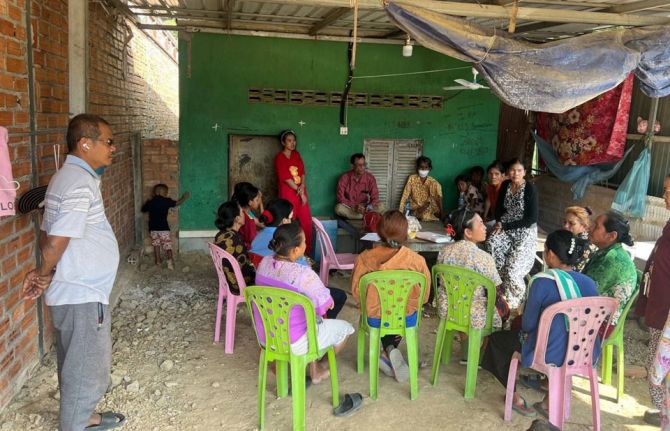
Mr Sophal’s own contribution began shortly after his diagnosis, when he started volunteering with Salvation Centre Cambodia, a local organization providing home-based support to people living with HIV.
“I went from home to home, encouraging people to get tested, start treatment and remain in care,” he said.
At a time when stigma and fear prevented many people from seeking health services, community workers provided information, accompanied people to clinics and helped families cope with the practical and emotional effects of HIV. Mr Sophal believes that timely community support helped many people survive.
He has also seen that support continues across generations. Children assisted by the organization more than 20 years ago are now adults, and some have become volunteers themselves.
“It is community support passed from one generation to the next,” he said.
The contribution of communities to the 95-95-95 targets has extended beyond helping individuals access services. Community representatives have brought people’s experiences to health workers and decision-makers, challenged discriminatory treatment and advocated for practical changes in the way services are delivered.
Community feedback has contributed to longer clinic opening hours, peer counselling, multi-month dispensing of antiretroviral medicines and more accessible testing options. These changes have made it easier for people to start treatment and remain in care while managing work and family responsibilities.
Mr Sophal is also proud of community advocacy to strengthen social protection for people living with HIV.
Although HIV treatment in Cambodia is free, poverty, unstable employment, food insecurity and the cost of travelling to health facilities is still challenging.
Community organisations have advocated for eligible people living with HIV to be connected to Cambodia’s IDPoor system- which identifies and registers households living in poverty. Those who qualify can receive Equity Cards, providing access to free public healthcare through the Health Equity Fund, as well as cash transfers and other forms of social assistance.
However, Cambodia’s achievement does not mean that the HIV epidemic is over.
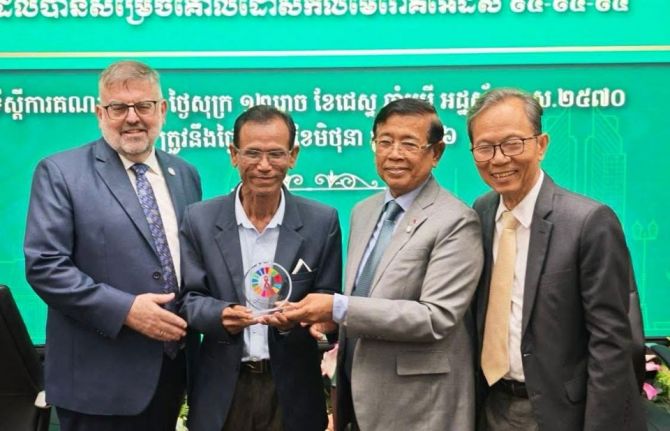
“This achievement is a source of national pride, but it also comes with responsibility,” said Ieng Mouly, Senior Minister and Chair of the National AIDS Authority. “Our task now is to protect and sustain this progress through stronger country ownership and increased domestic investment in the national HIV response.”
Cambodia’s 95-95-95 announcement comes at a critical time for the global HIV response. The UNAIDS Global AIDS Brief, released on 12 June 2026, warns that cuts in external financing, underinvestment in HIV prevention and community-led services, and growing restrictions on human rights and civic space could reverse hard-won gains.
Community-led organizations are under particular financial pressure.
“As external resources become more uncertain, protecting these gains will require sustained political leadership and investment in the fundamental elements of a multisectoral and collaborative HIV response,” said Patricia Ongpin, UNAIDS Country Director for Cambodia, Lao PDR, Malaysia and Viet Nam.
Mr Sophal welcomes the Cambodian Government’s growing investment in the HIV response, but says a sustainable mechanism is also needed to fund community organizations from domestic resources. Social contracting - through which the government finances community groups to deliver agreed services - could help protect the outreach, trust and local knowledge that contributed to Cambodia’s achievement.
“As the first country in Asia and the Pacific to achieve the 95-95-95 targets, Cambodia sends a clear message to the region and the world: ending AIDS is possible when governments work closely with communities and keep people at the center of the response” said Eamonn Murphy, UNAIDS Regional Director for Asia and the Pacific.
For Mr Sophal, to end AIDS, the response needs to focus on the people who remain most affected by HIV.
“If I were addressing heads of state at the United Nations General Assembly, I would ask them to remain focused on key populations,” he said. “They are among the people most affected by HIV and must not be left behind. If we protect their health and rights, we can end AIDS. My second message would be: continue investing in communities.”
Region/country
Documents
Agenda item 8: Summary of the multistakeholder consultation
30 June 2026
Documents
Agenda item 4: Corrective administrative actions, including disciplinary measures taken in 2025
30 June 2026

Documents
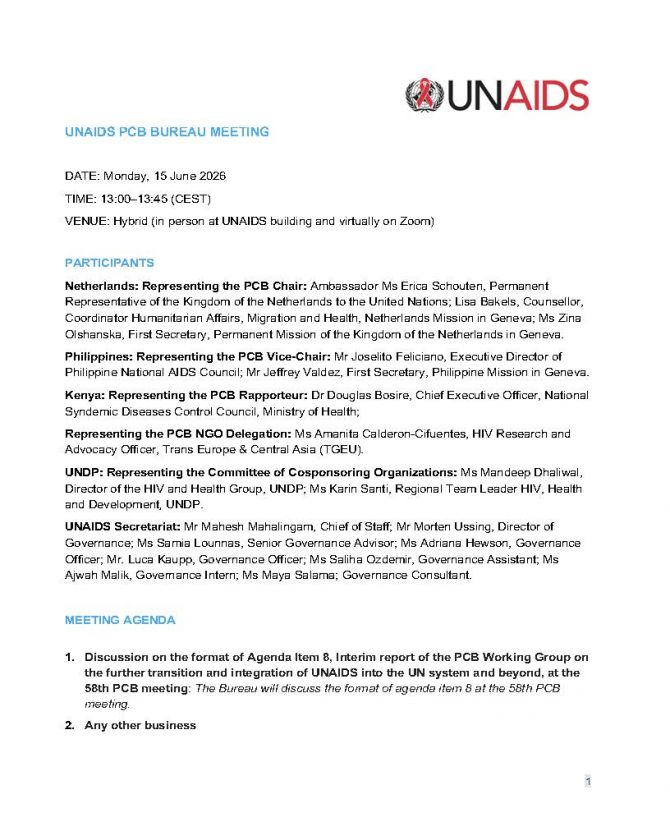
UNAIDS PCB Bureau meeting 15 June 2026
17 June 2026
Feature Story
Western African youth living with HIV network hitting major roadblocks
15 June 2026
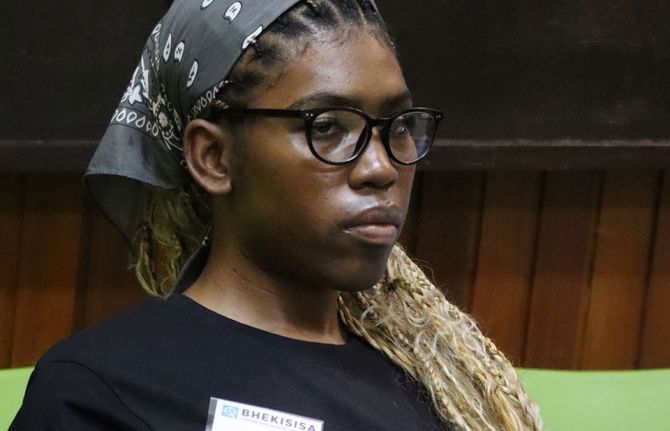
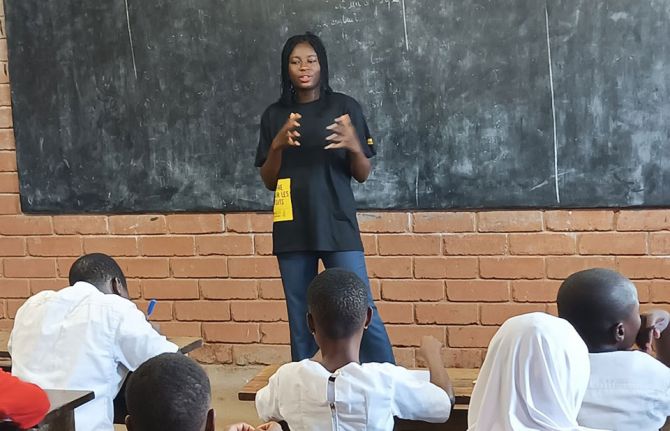
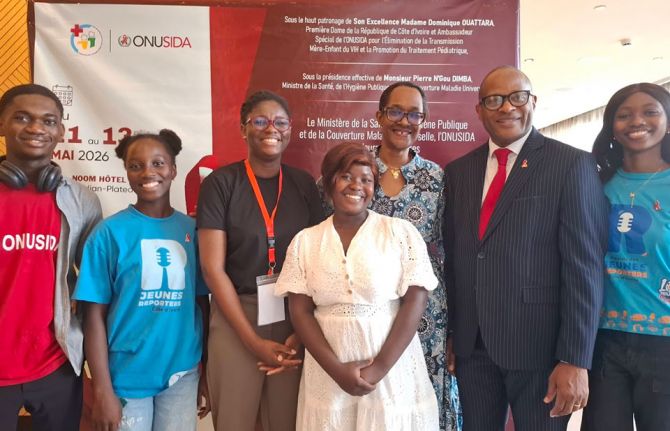
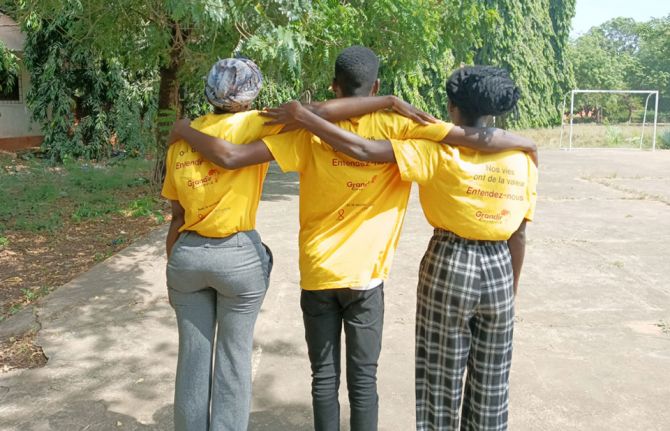
15 June 2026 15 June 2026Three years ago, Adjovi Husunukpe co-founded the Western and Central African HIV+ Youth Network (RAJ+AOC) to connect with her peers and strengthen youth-led advocacy in the HIV response. “We wanted to be heard at a national and international level as one,” she said.
The network known for its top-notch community outreach and linkage to care now has nearly 500 members across 14 countries but has hit some recent roadblocks.
“We are all volunteers and are scraping by financially so it’s hard to project ourselves as individuals and as an organization,” said the Togolese born Ms Husunukpe.
2025 saw a steep decrease in funding which specially affected community-led organizations. That meant a number of things for RAJ+AOC. They have to compete with other non-governmental organizations (NGOs) for financial support but are not considered equally.
“People keep saying we are not legitimate because we are young people, which is unfair and untrue,” she said.
On top of that, she said, HIV prevention and hard-fought youth-oriented programmes seem to have disintegrated into thin air. UNAIDS June Global AIDS report states that community-led organizations are often the last organizations to be funded by domestic resources and consequently have been some of the first to experience the impact of the 2025 international funding cuts.
Adding to her worries may also be the loss of technical support from UNAIDS as country offices merge in the region.
“We keep being told that we represent 60% of the population of the African continent but our sustainability hangs in the balance,” Ms Husunukpe said.
Having been born with HIV and lost her parents at a young age, the 27-year-old argues that lived experience should be recognized as expertise. She and other youth leaders call for youth-led organizations to be meaningfully integrated into health policy and decision-making spaces.
“We are invited to speak but are rarely included in drafting recommendations or shaping decisions,” the sociology student said. “Let us co-lead initiatives that respond to our real needs.”
UNAIDS Regional HIV and Public Health Adviser, Ange-Valérie Meralli-Ballou, based in Dakar, said the data is clear. In 2025, 160,000 adolescent girls and young women acquired HIV in sub-Saharan Africa. In addition, 35% of all child HIV infections now occur in western and central Africa. Most of these infections are attributable to limited access to integrated sexual and reproductive health and rights services for youth and pregnant women. "We cannot continue to exclude the majority of the population and expect results," she said.
In her mind, youth-led NGOs are not only willing but structurally positioned to integrate health systems if given the money and decision-making powers to do so.
The Global AIDS Strategy 2026-2031 calls for promoting the creation and integration of community health centres, managed by local actors and community organizations in the region. It also strongly encourages countries to conduct communication campaigns using social media to raise HIV awareness.
Pointing outside to young people gathered on a staircase with her outstretched right hand, Ms Meralli-Ballou said, “This strategy is a political tool or a roadmap if you will so let us use it to leverage resources, sustain youth engagement and agency, and build that future now.”