

Press Release
UNAIDS board rejects sunsetting of UNAIDS
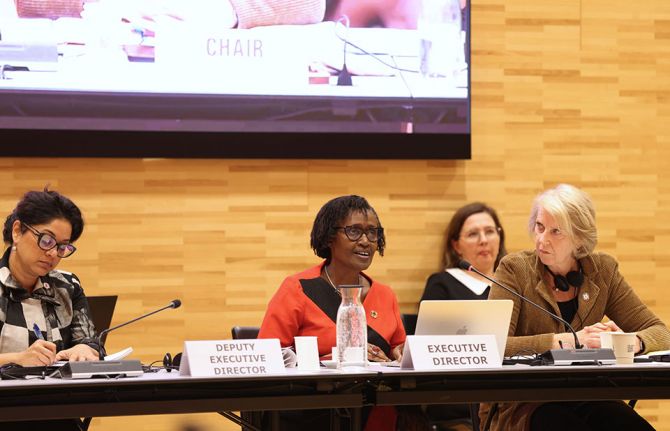
27 October 2026 27 October 2026GENEVA, 26 October 2026—The UNAIDS Programme Coordinating Board (PCB) has reaffirmed strong support for a continued, streamlined and efficient UNAIDS Joint Programme. Board members were unanimous that its transformation must protect people and communities living with, at risk and affected by HIV, and ensure governments and communities sustain and enhance the gains of the AIDS response.
In her remarks, Executive Director Winnie Byanyima captured the significance of the decision, “You have rejected the sunsetting of UNAIDS and chosen instead to transform and strengthen this unique Joint Programme. I thank programme countries, donors, civil society and activists who stood firm and fought for the future of UNAIDS. Saving the Joint Programme is only the beginning. Now we must transform it and get that transformation right.”
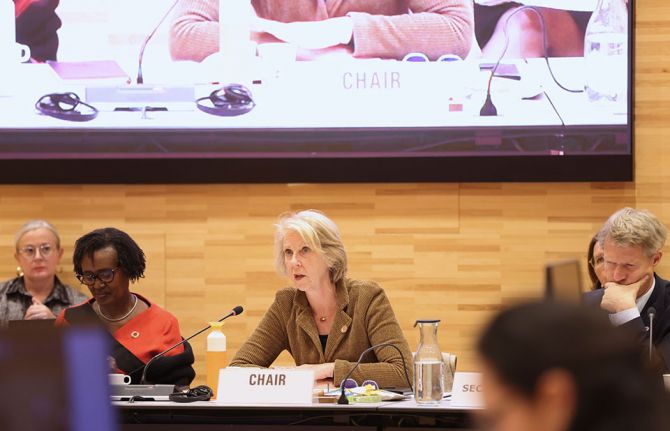
At its special session today, the Board took note of the final report of the PCB Working Group and approved the overall strategic direction for transition of UNAIDS as set out in the report. It asked the PCB Chair to transmit that direction and the Board’s decisions to the United Nations Economic and Social Council (ECOSOC).
The decisions taken by the board are in support of the directions set by the Secretary-General’s UN80 reforms. A transformed United Nations must measure its success not by the structures it preserves or abolishes, but by the impact we deliver for people. Addressing the Board, the Deputy Secretary-General Amina Mohammed said, “The Secretary-General’s intention was to preserve and strengthen the UN’s HIV response in face of disruption and anchor the response more firmly at the country level.”
The key strategic directions outlined in the report include:
- UNAIDS will not be sunset, and the UN's mandate on HIV continues
- A strong and focused Secretariat (Hub) leading on four core functions
- Cosponsors taking stronger leadership in technical areas, according to the division of labour
- Communities at the centre of the model at every level, with a shift to co-creation and co-leadership
- Human rights and gender equality protected
- The ECOSOC mandate and inclusive governance under the PCB maintained
- A phased transition, not a rushed one, shaped by each country's context and readiness.
The Board requested the Executive Director to establish a Transition Task Team, comprising Secretariat and Cosponsor representatives and two community representatives nominated by the PCB NGO delegation. The team will work closely with implementing countries, consult relevant Joint Programme stakeholders and be accountable to the Board for delivering a fully costed implementation plan.
Many programme countries have stepped forward to support UNAIDS in the face of funding cuts and potential withdrawal from countries.
Algerian Ambassador Idris Latreche announced an early voluntary contribution of US$40,000 to the UNAIDS country office in Algiers for 2027. Algeria also provides office premises free of charge and national personnel to support the office’s operations. Contributions have come from many countries including Benin, Brazil, Cambodia, China, Côte d’Ivoire, Kazakhstan, Laos, Philippines, South Africa and Thailand.
“These contributions reflect Algeria’s commitment to our collective efforts towards maintaining an effective UNAIDS presence at country level, towards ensuring continuity of services, and towards avoiding any disruption that could affect the people who depend on them,” said Ambassador Latreche.
The Board also approved the 2027 Work Plan and Budget, including simplified performance reporting. It thanked governments that contributed to the 2026 budget and urged others to release their contributions as soon as possible. It also encouraged governments to make multi-year commitments and release their 2027 contributions promptly.
Ms Byanyima also informed the Board that she will complete her service as Executive Director on 31 December 2026. The Secretary-General will appoint an interim Executive Director from 1 January 2027 while the Board begins the selection process for the next Executive Director.
UNAIDS
The Joint United Nations Programme on HIV/AIDS (UNAIDS) leads and inspires the world to achieve its shared vision of zero new HIV infections, zero discrimination and zero AIDS-related deaths. UNAIDS unites the efforts of 11 UN organizations—UNHCR, UNICEF, WFP, UNDP, UNFPA, UNODC, UN Women, ILO, UNESCO, WHO and the World Bank—and works closely with global and national partners towards ending the AIDS epidemic by 2030 as part of the Sustainable Development Goals. Learn more at unaids.org and connect with us on Facebook, Twitter, Instagram and YouTube.