Feature Story
Counting what it takes to end AIDS
26 October 2026
26 October 2026 26 October 2026In March 2024, UNAIDS established a Global Task Team of experts from governments, civil society, donors, academic and public health institutions to recommend a new set of global HIV targets for 2030. The targets set out what is required to put the world on the path to end AIDS as a public health threat by 2030. But defining the ambition raised an equally important question: what would it actually cost, and what impact would achieving the targets have?
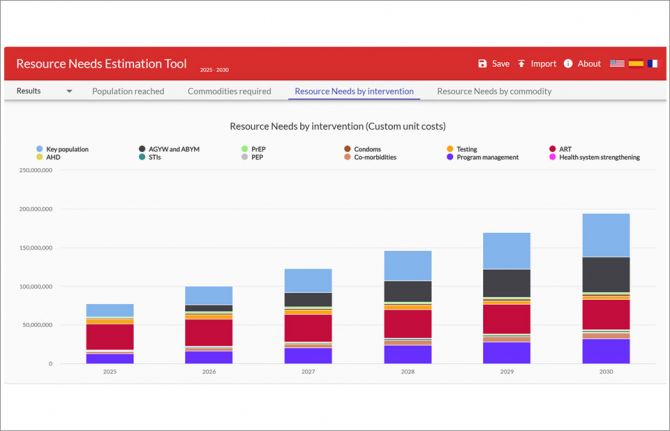
To answer it, the UNAIDS Sustainability Practice produced The impact and cost of reaching the UNAIDS global HIV targets, a comprehensive assessment drawing on resource needs estimation and epidemiological modelling across more than 118 countries.
The study was jointly led by two experts with complementary roles. John Stover led the epidemiological modelling to quantify the health impact of reaching the 2030 targets. Deepak Mattur, of UNAIDS, led the overall resource needs framework: building and validating a global unit cost database, convening technical consultations with UNAIDS, partner agencies and national programmes, and bringing biomedical, health system and societal enabler investments together into a single global estimate.
Mariana Siapka, Triantafyllos Pliakas and Ricardo Valladares-Cardona contributed to estimating the resources needed for societal enablers, the often overlooked investments that shape whether people can access services at all.
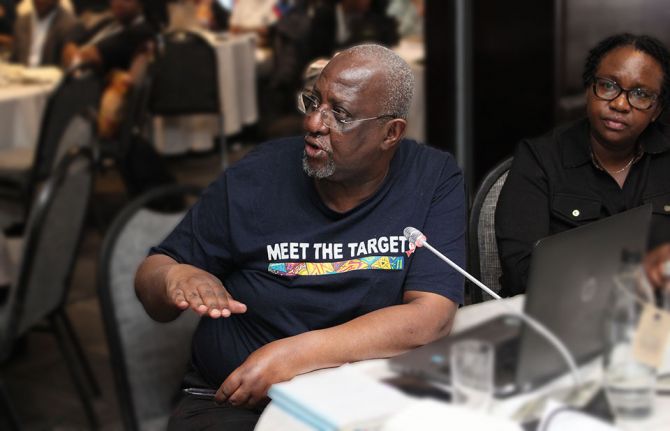
“Resource needs provide an important bridge between ambition and accountability," Mr Mattur explains. “They have provided countries and partners a benchmark against which to monitor progress in mobilizing financial resources, assess financing gaps, track domestic and international commitments, and plan for a more sustainable HIV response through 2030 and beyond.”
What the evidence shows
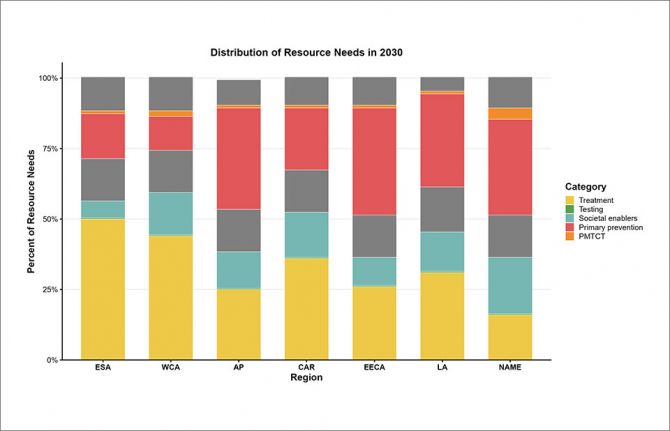
Reaching the UNAIDS 2030 targets could cut annual new HIV infections by 77% and AIDS-related deaths by 50% between 2023 and 2030, effectively meeting the 2030 goal of ending AIDS as 90% reduction in new HIV infections and AIDS-related deaths compared with 2010. Doing so would require approximately US$21.9 billion annually in low- and middle-income countries by 2030.
Just as important is what the analysis says about how. Ending AIDS cannot be achieved through treatment and prevention alone. It requires sustained investment in health systems, community-led responses, human rights and societal enablers.
“The modeling confirms that through a combination of responses including biomedical, behavioral and societal interventions we can achieve Ending AIDS targets at a reasonable cost,” says Mr Stover.
From evidence to commitment
The analysis became a key evidence base for the 2030 global HIV targets, particularly the financing targets on total resource mobilization, domestic HIV financing, prevention investments and societal enablers. Its findings have informed discussions ahead of the 2026 High-Level Meeting on HIV/AIDS, giving political commitments a foundation in evidence and giving the world a way to hold itself accountable.
The publication is written for those who must make the hard decisions: governments, donors, development partners, civil society, community organizations, researchers and policy-makers. It offers a shared benchmark for assessing financing gaps, aligning priorities and tracking progress, and it informs conversations about sustainable financing and domestic resource mobilization.
It also reflects the unique role UNAIDS plays: convening partners, setting evidence-based targets, supporting country validation, coordinating technical expertise across institutions, and translating global ambition into concrete investment needs.